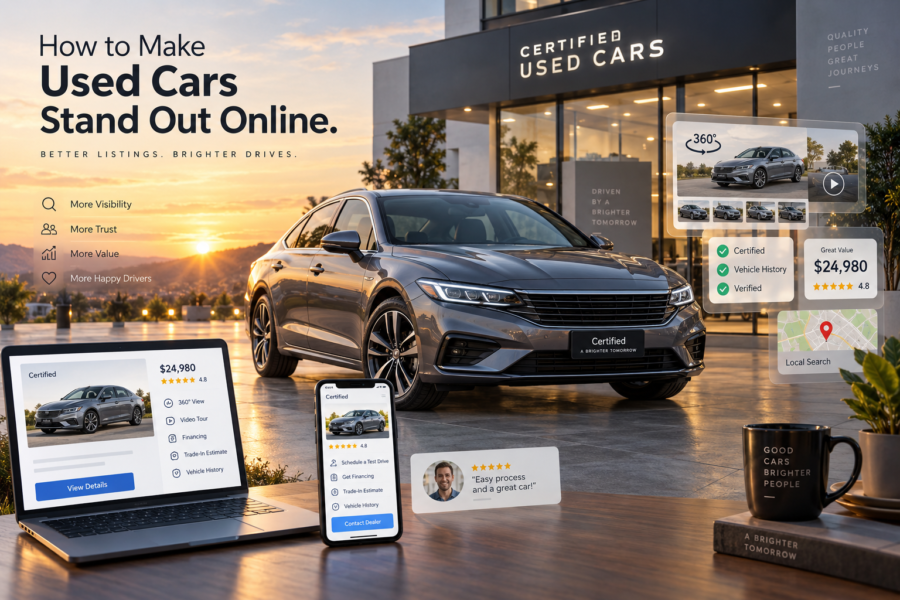
How to Make Used Cars Stand Out Online and Win More Buyer Trust
Almost 90% of car buyers begin their search online, browsing listings, comparing vehicles, reading reviews, and narrowing their choices before visiting a dealership. That first digital impression can determine whether a shopper clicks on your vehicle or keeps scrolling. Used car dealers now compete with thousands of listings, often featuring the same makes and models. To stand out, a dealership needs more than basic photos and a short specification list. Strong presentation, useful information, responsive engagement, and visible proof of trust can turn an ordinary listing into a serious sales opportunity.
Start With Visuals That Earn the Click
A vehicle listing begins with what shoppers see. Poor lighting, cluttered backgrounds, awkward angles, and inconsistent images can make even a well-maintained car look less appealing. Professional photography can help, but dealerships do not always need expensive equipment or a dedicated photographer.
Clean images can be captured with a phone, camera, or another available device. The setting should be free of distractions, and the lighting should reveal the vehicle’s condition and features. Include exterior and interior views, as well as photos of the front, rear, sides, wheels, engine, and other areas buyers are likely to inspect.
Improve Consistency With AI Image Enhancement
AI image tools can help dealerships standardize their inventory. Backgrounds can be removed or replaced with studio-style settings, while lighting, glare, color, and sharpness can be adjusted for a consistent appearance. The purpose should be to improve clarity and presentation, not to disguise damage or alter the vehicle’s actual condition.
A uniform visual style also gives the dealership a more professional identity. When listings share similar backgrounds, image quality, and presentation, shoppers may feel more comfortable browsing multiple vehicles from the same seller.
Give Buyers More Than Static Photos
Photos show selected angles, but 360-degree views and virtual tours allow shoppers to examine a vehicle in a more interactive way. Buyers can explore the exterior and interior from home, creating an experience closer to walking around a car on the lot.
This expanded view can answer questions before a buyer contacts the dealership. It also supports transparency because shoppers can see more of the car instead of relying on a few carefully chosen images.
Write Listings That Feel Specific and Useful
A title such as “2018 Honda Civic, good condition” gives a buyer very little reason to stop. It identifies the vehicle, but it does not communicate what makes that car worth considering. A more specific title can include features, certification, value, or other details that separate the listing from similar results.
For example, “Certified 2018 Honda Civic, Sunroof, Smooth Ride, Great Value” gives shoppers more information at a glance. It also creates a stronger reason to open the listing.
Turn Vehicle Details Into a Story
Descriptions should still include factual information such as the year, make, model, mileage, condition, and features. However, a list of specifications alone can feel flat. A more engaging description explains how the vehicle has been maintained and what kind of driving experience or lifestyle it may suit.
A description for a well-maintained 2018 Honda Civic EX might mention low mileage, a sunroof, smooth performance, certification, and readiness for its next owner. The tone should sound genuine and conversational, as if a knowledgeable salesperson were explaining the car directly to a shopper.
Add Benefits That Reduce Uncertainty
A vehicle can become more appealing when the listing clearly explains the additional value offered by the dealership. Depending on what applies, this may include:
- An extended warranty or free service offer
- A certified inspection or CPO designation
- Financing and trade-in options
These details help buyers understand what they receive beyond the vehicle itself. They can also make the dealership feel more transparent and give shoppers more confidence when comparing similar cars.
Use Video to Make the Vehicle Feel Real
Images help buyers see a car, while videos can help them understand what it may feel like to inspect and use. A short video can present the vehicle in a more natural and authentic way, especially when it shows areas that static images might not explain well.
A one- to two-minute clip can cover the interior and exterior while highlighting the dashboard lights, engine, infotainment system, trunk space, and key features. A phone, suitable lighting, and a steady hand may be enough to create the footage.
Show the Details Buyers Care About
The value of a walkaround video comes from its coverage. Rather than focusing on one attractive angle, the clip should guide the viewer around the vehicle and reveal the parts a buyer may want to check before making contact.
Showing the dashboard, engine, infotainment system, trunk, and interior gives shoppers more context. It can also reduce the gap between viewing a listing online and seeing the vehicle in person.
Add Customer Experiences
Customer videos can provide social proof that dealership-produced content cannot create on its own. Dealers can encourage buyers to record a short clip after purchase, explaining their experience and why they chose the dealership.
These testimonials may reassure new shoppers that real customers have completed the buying process. They also support the dealership’s reputation for being trustworthy and transparent.
AI video editing tools can combine short clips or still images into a ready-to-upload video. The source content describes tools that stitch visuals together, add motion effects, and include text overlays, reducing the need for costly equipment or hours of editing.
Make Trust Visible in Every Listing
Attractive presentation earns attention, but trust often determines whether a buyer takes the next step. Used car shoppers want confidence that the vehicle has been inspected, the price is clear, and the dealership will be honest about the car’s history and condition.
Certifications should be displayed clearly when they apply. Inspection or certified pre-owned information can reassure buyers that the vehicle has been evaluated and meets the stated standards. The source content does not identify specific certification programs beyond certified inspection and CPO references, so dealerships should present only credentials they can verify.
Display Ratings and Reviews
Many shoppers check dealership ratings and customer feedback before deciding whether to make contact. Listings and dealership profiles should highlight Google ratings, testimonials, and other customer comments where appropriate.
The source content identifies a 4.5 or higher rating as a level generally considered trustworthy and reliable. Reviews give buyers insight into other customers’ experiences and can make the dealership feel more credible than a listing without any supporting feedback.
Be Clear About Price and Vehicle History
Transparent pricing removes one of the most common sources of buyer hesitation. Listings should make the price clear and avoid leaving shoppers to wonder about hidden costs. Vehicle history reports such as CARFAX or AutoCheck can also help buyers understand the car’s background.
Sharing the vehicle’s history does not guarantee a sale, but it gives shoppers information needed to make a more confident decision. Honest disclosure of flaws matters too. Hiding a problem may create difficulties during inspection or negotiation and can damage the dealership’s reputation.
Help Buyers Find and Compare Your Inventory
A well-made listing cannot generate results if buyers never see it. Search optimization and distribution across multiple platforms help expand the listing’s reach.
Specific terms are more useful than broad labels. Instead of “Used Toyota Corolla,” a dealership might use “Used 2018 Toyota Corolla LE in Dallas, TX under $15,000.” This example combines the vehicle, year, trim, location, and price. Mileage and notable features can add further detail when relevant.
Listings can be shared through automotive marketplaces such as Autotrader, Cars.com, CarGurus, and TrueCar. Social media channels, including Facebook Marketplace, Instagram Reels, and YouTube Shorts, offer additional places to present inventory.
Consistency matters when the same car appears across several platforms. The logo, photo style, descriptions, and tone should feel connected. A consistent presentation supports brand recognition and can make shoppers more comfortable contacting the dealership.
Interactive tools can also make the buying process easier. Financing calculators and trade-in estimators help shoppers explore monthly payments, potential savings, and estimated trade-in values. A conversational assistant can answer questions quickly, although the source content emphasizes that buyers want useful conversations rather than generic automated replies.
Build Engagement Beyond the Listing
Social media gives dealerships a way to show real customer experiences instead of publishing inventory alone. Delivery photos and short videos can capture the moment buyers receive their vehicles, creating content that feels personal and relatable.
Interactive posts can encourage participation. A dealership might ask followers to guess the price of an SUV, choose which color best suits a model, or respond to a poll. These formats can make social pages more memorable and invite potential buyers into a conversation.
User-generated content adds another layer of credibility. Asking customers to share images or videos of their purchases and tag the dealership shows that real people have completed transactions there. Combined with reviews, clear pricing, detailed descriptions, and honest visuals, this content helps create a stronger impression of reliability.
Conclusion
Making used cars stand out online requires more than uploading a few photographs and basic specifications. Dealerships need clean, consistent visuals, specific titles, useful descriptions, walkaround videos, visible certifications, transparent pricing, and customer proof. Search-friendly details and distribution across several platforms increase the chances that interested buyers will find the inventory. Every part of the listing should answer a question, reduce uncertainty, or give shoppers a reason to take the next step.
Frequently Asked Questions
How many photos should a used car listing include?
A used car listing should include 9 to 15 high-quality images, covering the exterior, interior, major features, and different viewing angles.
Should a dealership show flaws in a used car listing?
Yes. Honest disclosure of flaws helps build trust. Hiding defects can create problems during inspection or negotiation and may harm the dealership’s reputation.
Is AI image editing safe for car listings?
AI editing is safe when used to improve clarity, lighting, color, or backgrounds without hiding defects or misrepresenting the vehicle’s actual condition.
What should a vehicle description include?
A vehicle description usually includes the car’s year, make, model, mileage, condition, features, and additional benefits such as certification, financing, warranty, or service offers.
Do videos help used car listings?
Videos can make listings feel more realistic by showing the interior, exterior, dashboard, engine, infotainment system, trunk, and other details buyers want to inspect.
Meta Description
Learn how to make used cars stand out online with better visuals, descriptions, videos, trust signals, and search-friendly listings.